


Caravan Battery Maintenance: Why You Should Remove and Recharge It Twice a Year
A leisure battery can gradually lose charge while your caravan is stored. Regular inspection and recharging can help prevent premature failure and keep essential caravan systems ready for use.
A caravan leisure battery is easy to overlook when the lights, water pump and control panel appear to be working normally. However, batteries naturally lose charge over time, and some caravan systems may continue drawing power even when the caravan appears to be switched off.
Alarms, trackers, control panels, USB sockets and other equipment may create a small but continuous drain. If the caravan remains unused for several weeks or months, that gradual discharge can leave the battery deeply depleted.
Repeatedly allowing a leisure battery to remain at a very low state of charge can reduce its capacity and shorten its useful life. In some cases, the battery may no longer recover properly even after being connected to a charger.
A sensible routine is to inspect and recharge the battery at least twice a year, usually before winter storage and again before the main touring season. Depending on the caravan, storage arrangement and battery type, the battery may also need more frequent attention.
Four habits that help protect your battery
What does the caravan leisure battery actually do?
The leisure battery provides 12-volt power for many of the systems inside a touring caravan. Depending on the model and equipment fitted, this may include lighting, the water pump, control panels, television equipment, USB sockets and parts of the heating system.
It is different from a car starter battery. A starter battery is designed to release a large amount of power for a short period, while a leisure battery is designed to provide a steadier supply over a longer time.
The caravan may recharge the leisure battery through a mains charger when connected to electric hook-up. Some caravans may also receive charge from the tow vehicle or a solar panel, depending on the installation.
None of these systems should be assumed to be working correctly without checking. A solar panel, charger or towing connection may reduce discharge, but it does not remove the need for inspection.
Why batteries lose charge during storage
Every battery gradually loses charge through a process known as self-discharge. The rate varies according to the battery type, temperature, age and condition.
The caravan itself may create additional drain. An alarm, tracker, radio memory, control panel or other connected equipment can use a small amount of power continuously.
A small drain may not seem significant over a few days, but it can become important over several months. A battery that begins storage only partly charged may reach a damaging state of discharge much sooner.
Cold conditions can also reduce the battery’s available performance. This is one reason battery problems often become apparent when the caravan is first brought back into use after winter.
Security equipment and control systems may remain active even when the main 12-volt switch is turned off. Check the caravan handbook before disconnecting the battery.
Why a twice-yearly battery check is a useful minimum
Checking the battery before winter storage helps ensure that it does not begin the coldest part of the year in a partly discharged condition.
A second check before the main touring season gives you the opportunity to confirm that the battery has retained charge, inspect the connections and recharge it before the caravan is used.
These two seasonal checks create a practical minimum routine for owners who use their caravan mainly during spring and summer.
However, twice a year should not be treated as a universal maximum. A battery connected to an alarm or tracker, stored without mains power or known to be older may require more regular monitoring.
The battery manufacturer may recommend a particular charging interval or storage voltage. Those instructions should always take priority over general advice.
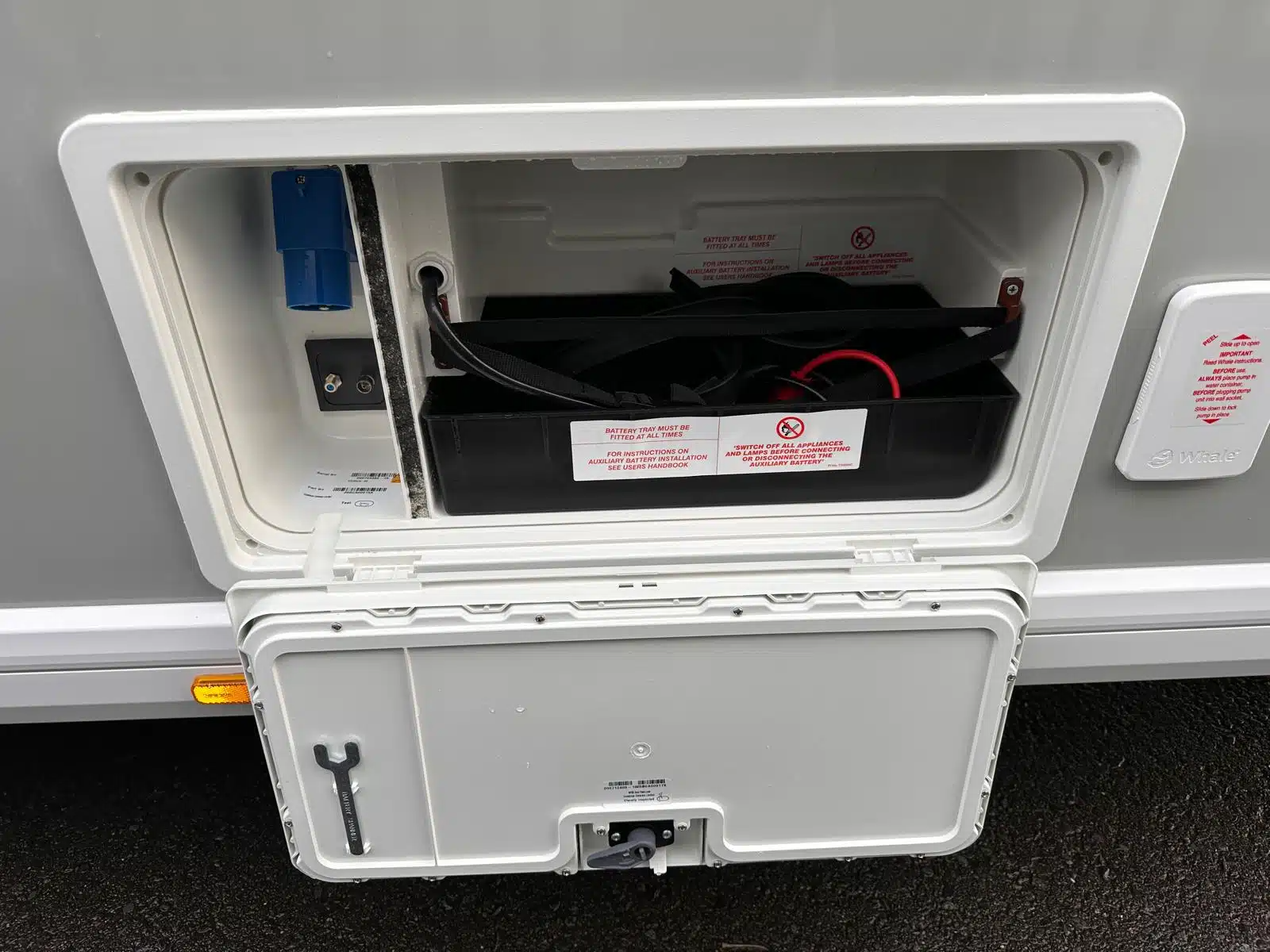
Should you remove the battery from the caravan?
Removing the leisure battery can be helpful when the caravan will remain unused for a long period and there is no reliable charging supply available.
It allows the battery to be stored in a more controlled environment and makes periodic charging easier. It can also prevent an unnoticed electrical drain inside the caravan.
However, removal is not always appropriate. The battery may power an alarm, tracker, motor mover control system or other security equipment. Disconnecting it could disable those systems or cause settings to be lost.
Before removal, check the caravan handbook, alarm instructions, tracker requirements, insurance conditions and battery manufacturer’s guidance.
Where the battery remains installed, ensure it is being maintained by a suitable charging arrangement and check its condition regularly.
Removing or isolating the battery may disable the alarm, tracker or other security systems. Confirm the requirements before disconnecting anything.
How to remove a caravan battery safely
Switch off the caravan’s electrical equipment and disconnect any mains supply before beginning. Confirm the correct isolation procedure in the caravan handbook.
Wear appropriate eye protection and gloves. Batteries can be heavy, so use safe lifting technique and ask for assistance when needed.
The usual process is to disconnect the negative terminal first, followed by the positive terminal. When reconnecting, the positive terminal is normally connected first and the negative terminal last.
This sequence can reduce the risk of an accidental short circuit, but the exact procedure should still follow the caravan and battery manufacturer’s instructions.
Keep tools away from both terminals at the same time, and never place metal objects on top of the battery. Remove the securing strap or bracket carefully and lift the battery upright.
If the terminals are badly corroded, the casing is swollen or cracked, or there are signs of leakage, do not continue using the battery. Arrange for professional inspection and safe disposal.
What to inspect before recharging
Start with the battery casing. Look for swelling, cracking, distortion, leakage or heat damage. A damaged battery should not be charged or returned to service.
Inspect the terminals and cable connectors. A small amount of surface oxidation may be manageable, but heavy corrosion, loose connectors or damaged cables require attention.
Check that the battery is securely held in its compartment. The retaining strap or bracket should prevent movement while towing.
Make sure the compartment is clean, dry and appropriately ventilated. Do not store unrelated equipment around the battery if it may obstruct ventilation, damage cables or contact the terminals.
Where the battery is a serviceable flooded type, the manufacturer may specify electrolyte checks. Many modern leisure batteries are sealed and must not be opened.
Use a charger designed for your battery type
Leisure batteries are available in several types, including traditional flooded lead-acid, AGM, gel and lithium-based designs. They do not all require the same charging programme.
A suitable smart charger can monitor the charging process and adjust its output through different stages. Some chargers also provide a maintenance or float mode for longer connection periods.
The charger must be compatible with the battery chemistry, capacity and voltage. An unsuitable charging profile can result in incomplete charging, overheating or battery damage.
Do not assume that a charger suitable for a conventional car battery is appropriate for every caravan leisure battery.
Read both the charger and battery instructions before connecting them. When uncertain, ask a workshop or battery specialist to confirm compatibility.
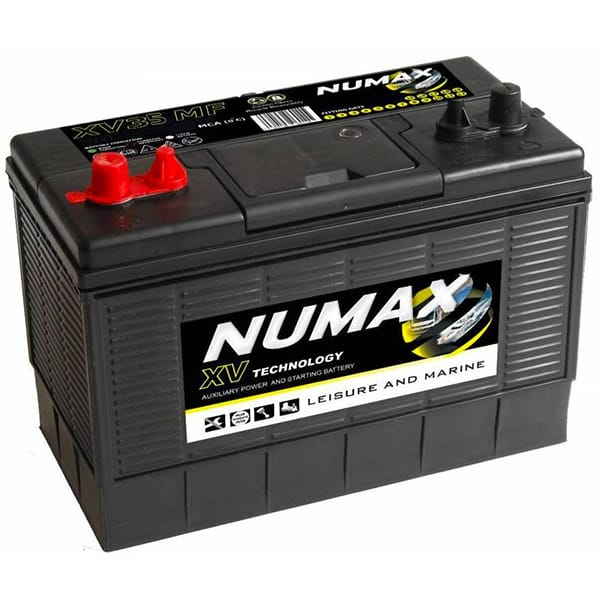
Recharge the battery in a safe location
Charge the battery in a dry, stable and well-ventilated area away from flames, sparks, heaters and smoking materials.
Keep the battery upright and place it on a firm, non-conductive surface. Do not place the charger directly on top of the battery.
Connect the charger according to its instructions before switching on the mains supply. Confirm that the positive and negative leads are connected to the correct terminals.
Monitor the battery during charging. Stop immediately if the casing becomes unusually hot, begins swelling, leaks or produces an unexpected smell.
Once charging is complete, switch off and unplug the charger before removing the leads, unless the manufacturer specifies a different safe procedure.
Swelling, cracks, leakage, excessive heat or a strong unusual smell can indicate a serious fault. Keep clear and seek professional advice.
How to store a removed battery
Store the battery upright in a cool, dry and ventilated location. Keep it away from direct heat, flames, children and areas where it could be knocked over.
Protect the terminals from accidental contact with metal objects. Do not place tools, shelving or other batteries where they could bridge the terminals.
Historically, owners were often advised never to place batteries on concrete. Modern battery cases are generally better insulated, but a clean, stable and non-conductive surface remains sensible.
Label the battery with the date it was charged and set a reminder to check it again. A battery stored for several months may still require periodic maintenance charging.
Do not allow a removed battery to remain forgotten until the next holiday. Measure or assess its state of charge according to the manufacturer’s recommendations.
Reinstalling the battery correctly
Before reinstalling, inspect the battery compartment, retaining strap, cables and connectors. Clean the area and ensure it is dry.
Place the battery in the correct orientation and secure it firmly. A loose battery can move while towing and damage the casing, terminals or surrounding equipment.
Connect the terminals in the order specified by the manufacturer. This will commonly mean the positive terminal first and the negative terminal last.
Ensure the connectors are secure but do not overtighten or damage the terminals. Refit terminal covers where provided.
Restore the caravan’s electrical systems and confirm that the control panel, lighting, pump, alarm, tracker and motor mover operate as expected.
Signs your leisure battery may need replacing
A battery that appears fully charged but loses power very quickly may have reduced capacity. This becomes more common as batteries age or after repeated deep discharge.
Other warning signs include difficulty holding charge, unreliable motor mover performance, dimming lights, unexpected control-panel warnings or the battery becoming unusually warm.
Physical swelling, cracking, leakage or severe terminal corrosion are more urgent concerns. The battery should be removed from use and assessed professionally.
Battery voltage alone does not always provide a complete picture of condition. A workshop or battery specialist may use a suitable capacity or load test to assess performance more accurately.
What if the caravan has a solar panel?
A solar panel can help maintain a leisure battery during storage, but its performance depends on daylight, panel size, cleanliness, shading, controller settings and the level of electrical drain.
Winter sunlight is weaker and available for fewer hours, so a solar panel that maintains the battery successfully in summer may not provide the same result during winter.
Check that the panel and controller are working and that the system is configured for the battery type. Keep the panel reasonably clean and free from heavy shading where practical.
Continue checking the battery even when solar charging is fitted. Solar equipment is helpful, but it should not be treated as a guarantee that the battery will remain healthy indefinitely.
A simple twice-yearly maintenance schedule
- Check for hidden electrical drain
- Inspect the battery and terminals
- Recharge fully before storage
- Remove if appropriate for the caravan
- Confirm alarm and tracker requirements
- Set a reminder for the next inspection
- Check the casing and charge level
- Recharge with a compatible charger
- Inspect the compartment and cables
- Secure and reconnect correctly
- Test the caravan’s 12-volt systems
- Arrange testing if performance is weak

Common caravan battery maintenance mistakes
Extended deep discharge can reduce capacity and permanently damage the battery.
The charging programme must suit the battery chemistry and specification.
Removing the battery may disable alarms or trackers and affect insurance requirements.
Loose or corroded connections can create poor performance, heat and electrical faults.
Batteries should be charged in a stable, dry and ventilated location away from flames and sparks.
Solar charging still requires a functioning controller, sufficient daylight and regular battery checks.
Regular battery care can save inconvenience and expense
A caravan leisure battery may continue losing charge even while the caravan is stored. Checking and recharging it before winter and again before the main touring season creates a practical minimum maintenance routine.
Remove the battery only where it is appropriate to do so, and confirm the requirements of alarms, trackers and other connected equipment first. Always use a charger that is compatible with the battery type.
Inspect the battery, cables and compartment regularly, and seek professional advice if the battery is damaged, repeatedly loses charge or no longer delivers reliable performance.
The Active Leisure workshop team can assist with caravan electrical checks, servicing and seasonal maintenance, helping you prepare confidently for the journeys ahead.